WOMEN AND THE STRUGGLE FOR POLITICAL REPRESENTATION
Source: This Daily Live
March is more than a marker on the calendar. It is a season of reflection, recognition, and renewed resolve. As the world observes International Women’s Day 2026, attention turns not only to the achievements of women, but also to the inequalities that persist beneath the surface of progress. In Nigeria, this moment carries a particular weight. Women are visible everywhere—in markets, in classrooms, in businesses, and in the daily work of sustaining families and communities yet they remain strikingly invisible in the spaces where power is exercised.
This contradiction is not abstract; it is measurable. Women make up nearly half of Nigeria’s population and form a significant share of its voting strength, yet their presence in political office tells a different story. In a National Assembly of 469 members, only a small fraction are women. The Senate, with 109 seats, has historically had fewer than ten female senators at any given time, while the House of Representatives, with 360 members, and has rarely had more than 20 women. In practical terms, this means that for every woman in the legislature, there are more than 15 men shaping national decisions. At the state level, the imbalance is often even more pronounced, with some assemblies having little or no female representation at all.
These figures place Nigeria near the bottom of global rankings on women’s political participation. The gap becomes even clearer when compared with other African countries. In Rwanda, women occupy more than 60 percent of parliamentary seats, a transformation achieved through deliberate constitutional reforms after 2003. Senegal moved close to parity following its 2010 gender parity law, while South Africa has steadily increased women’s participation through party-based quotas since the mid-1990s. These examples show that change is possible when it is intentional.
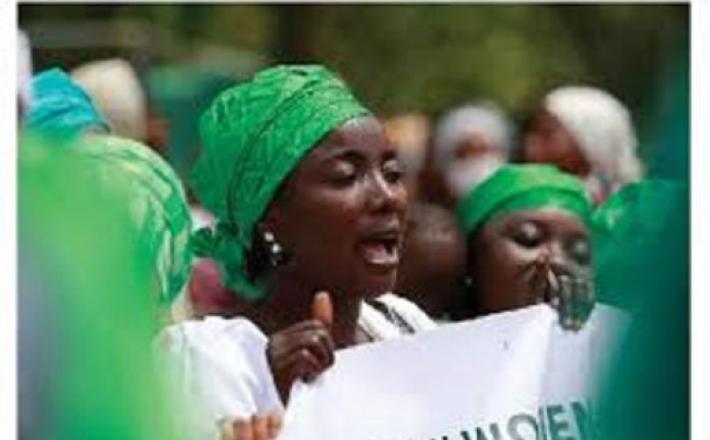
March is more than a marker on the calendar. It is a season of reflection, recognition, and renewed resolve. As the world observes International Women’s Day 2026, attention turns not only to the achievements of women, but also to the inequalities that persist beneath the surface of progress. In Nigeria, this moment carries a particular weight. Women are visible everywhere—in markets, in classrooms, in businesses, and in the daily work of sustaining families and communities yet they remain strikingly invisible in the spaces where power is exercised.
This contradiction is not abstract; it is measurable. Women make up nearly half of Nigeria’s population and form a significant share of its voting strength, yet their presence in political office tells a different story. In a National Assembly of 469 members, only a small fraction are women. The Senate, with 109 seats, has historically had fewer than ten female senators at any given time, while the House of Representatives, with 360 members, and has rarely had more than 20 women. In practical terms, this means that for every woman in the legislature, there are more than 15 men shaping national decisions. At the state level, the imbalance is often even more pronounced, with some assemblies having little or no female representation at all.
These figures place Nigeria near the bottom of global rankings on women’s political participation. The gap becomes even clearer when compared with other African countries. In Rwanda, women occupy more than 60 percent of parliamentary seats, a transformation achieved through deliberate constitutional reforms after 2003. Senegal moved close to parity following its 2010 gender parity law, while South Africa has steadily increased women’s participation through party-based quotas since the mid-1990s. These examples show that change is possible when it is intentional.